
Energy markets, export decisions, and shifting supply expectations are tightening global sugar trade and reshaping the commercial outlook for buyers and sellers.
Published in Abu Dhabi, 03 APR 2026 18:45 am (GST)
The global sugar market has moved sharply back into focus, with price direction now being shaped not only by crop fundamentals, but also by wider energy market pressure, export policy, and shifting supply expectations across major producing origins. For participants in physical commodity trade, this is exactly the kind of crossover market that deserves attention. Sugar is no longer just a soft commodity story. It is increasingly tied to freight, fuel, biofuels, and regional supply strategy.
Fresh data released this week underlines the change in tone. The FAO Food Price Index averaged 128.5 points in March 2026, up 2.4% month on month, while the FAO Sugar Price Index rose 7.2% to 92.4 points, its highest level since November 2025. FAO linked much of that move to higher energy prices and expectations that Brazil, the world’s top sugar exporter, may divert more cane toward ethanol during the upcoming harvest.
That matters because Brazil remains the anchor of the global export market. When oil strengthens and ethanol economics improve, the market quickly begins to reassess how much sugar will actually be available for export. Even where the broader supply outlook is not fundamentally tight, the trade reacts to marginal changes in mix, especially when buyers are already watching freight costs and shipment timing more carefully than usual. FAO said the rise in sugar prices came despite a generally favourable global supply outlook for the current season, supported by good harvest progress in India and Thailand.
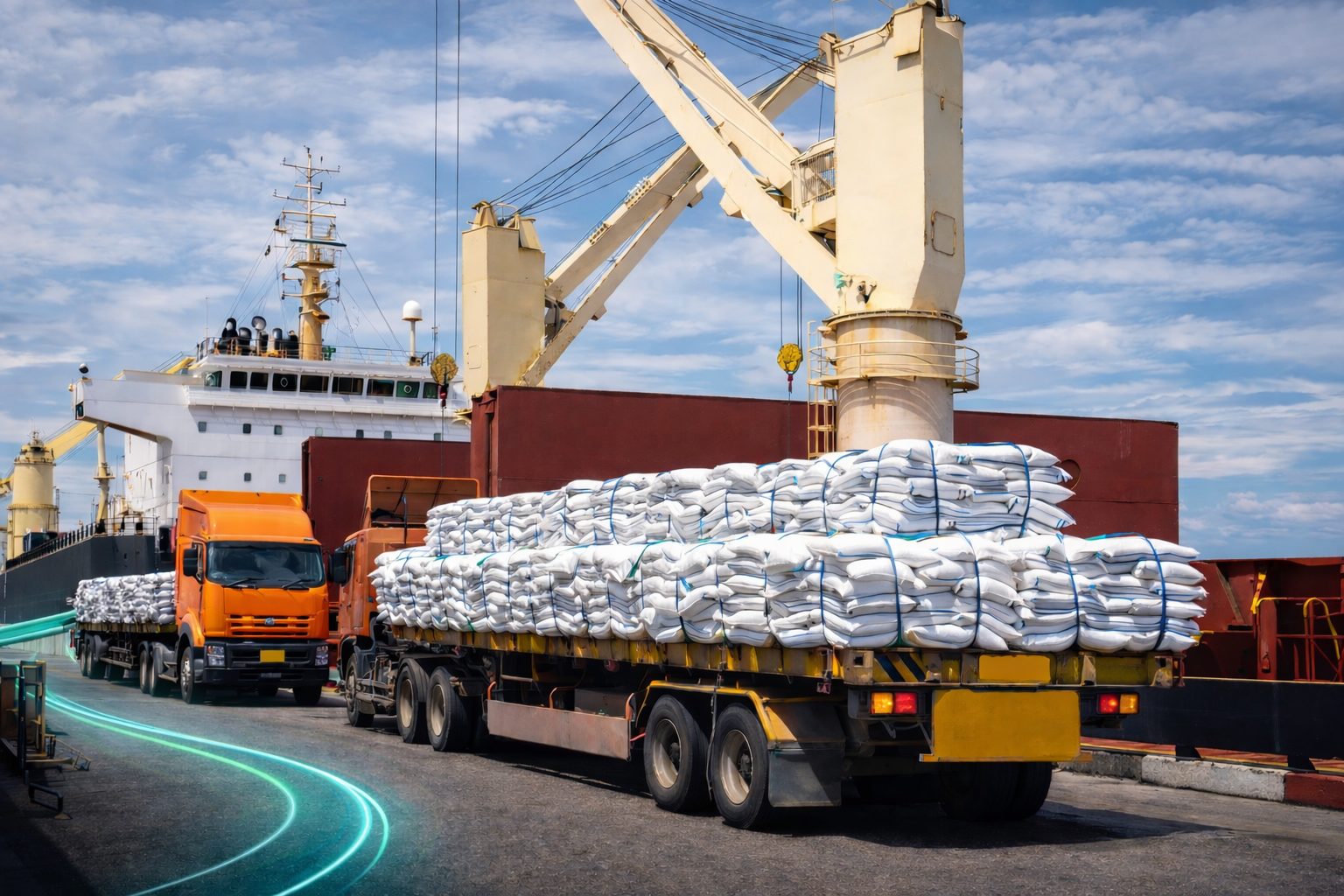
Global sugar trade is being shaped by more than crop volumes, with energy prices, export flows, and shifting supply expectations all influencing the market.
At the same time, India has become one of the most important stories in the market. Reuters reported on 2 April that Indian sugar production for the 2025/26 season is now unlikely to exceed 28 million metric tonnes, down from early season expectations of around 31 million tonnes. Domestic demand, by comparison, is estimated at 28.5 to 29 million tonnes. By the end of March, 467 of 541 mills had already shut, versus 420 at the same point last year, reflecting weaker cane yields after excessive rainfall.
That shift is commercially important. India had entered the season expecting room to rebuild stocks and support exports. Instead, the market is now reassessing how much sugar can realistically leave the country without tightening the domestic balance too far. Reuters noted that the season began with opening stocks of 5 million tonnes, but next season may begin with less than 4 million tonnes, which should help support local prices.
And yet, in classic commodity fashion, export activity has not disappeared. Quite the opposite. On 23 March, Reuters reported that Indian mills had locked in 100,000 metric tonnes of export shipments in a single week after a slump in the rupee and a rise in global sugar prices improved the economics of overseas sales. Mills were offering sugar at around $450 per tonne FOB, with cargoes booked by buyers including Sri Lanka and African destinations such as Djibouti, Tanzania, and Somalia. Total contracted exports for the current season were reported at 550,000 tonnes, with some trade participants still seeing the potential for exports to reach around 1.5 million tonnes.
This is where the market becomes especially interesting for a trade group like Auctora. Buyers are dealing with two competing forces at once. On one side, India remains attractive for certain destinations because regional freight economics can compare favourably against Brazilian supply. On the other, shrinking Indian production and lower expected carryout stocks suggest that availability may not stay as comfortable as originally assumed. In practical terms, that means buyers who wait too long for perfect pricing can find themselves negotiating into a firmer market, especially for prompt or near-prompt programmes.
The broader backdrop also matters. FAO warned that rising energy and fertiliser costs linked to conflict escalation in the Near East are now feeding into agricultural pricing more broadly. Its March update showed not only stronger sugar prices, but also a 1.5% monthly increase in the cereal price index, including a 4.3% rise in wheat prices. The message is clear enough: agricultural commodity markets are not trading in isolation. Inputs, logistics, and energy are once again influencing soft commodity pricing in a meaningful way.
For serious market participants, sugar is therefore not just a food commodity. It is a strategic trade flow tied to currency, energy, weather, export quotas, and route efficiency. The current market does not point to panic, but it does point to a more selective and more timing-sensitive trading environment. Origins still matter. Freight still matters. Counterparty quality still matters. And in a market where supply can appear comfortable on paper while prompt availability tells a different story, execution discipline becomes the difference between a clean transaction and an expensive lesson.
At Auctora Trade Group, we continue to watch sugar and associated agricultural markets through that commercial lens, focusing not just on headline price movement, but on what is actually happening beneath the surface: export willingness, supply-chain practicality, regional demand patterns, and the credibility of counterparties entering the market. Because in commodities, the headline is only the start. The real trade is in the detail