How Abu Dhabi's urea export recovery, changing international prices and renewed supply-chain pressures are reshaping agricultural commodity trade, and what buyers and sellers should watch heading into 2027.
24 November 2026 | Auctora Trade Group | Global Commodity Intelligence
The global fertiliser market is entering a period in which producing a commodity and successfully delivering it are becoming two very different challenges. For international buyers, securing agricultural inputs has traditionally revolved around three considerations: price, quality and availability. Today, another factor is becoming equally important: can the supplier actually deliver the product under commercially viable conditions?
Recent developments in the United Arab Emirates offer a particularly interesting example. On 12 November 2026, Abu Dhabi-based Fertiglobe reported that its UAE fertiliser exports had recovered to 95% of production in the third quarter, compared with just 56% in the preceding quarter. That is a substantial operational recovery.
Yet the same announcement revealed that higher freight and logistics costs continued to place pressure on profitability, despite stronger export performance. The distinction is significant. It demonstrates that restoring production and international shipments does not automatically restore the economics of global trade.
For international commodity markets, this may prove to be one of the defining lessons of 2026.
A Major Export Recovery from Abu Dhabi
Fertiglobe occupies an important position in the international fertiliser market. Headquartered in Abu Dhabi, the company describes itself as the world's largest seaborne exporter of urea and net ammonia combined, with approximately 6.6 million tonnes of annual production capacity across facilities in the UAE, Egypt and Algeria.
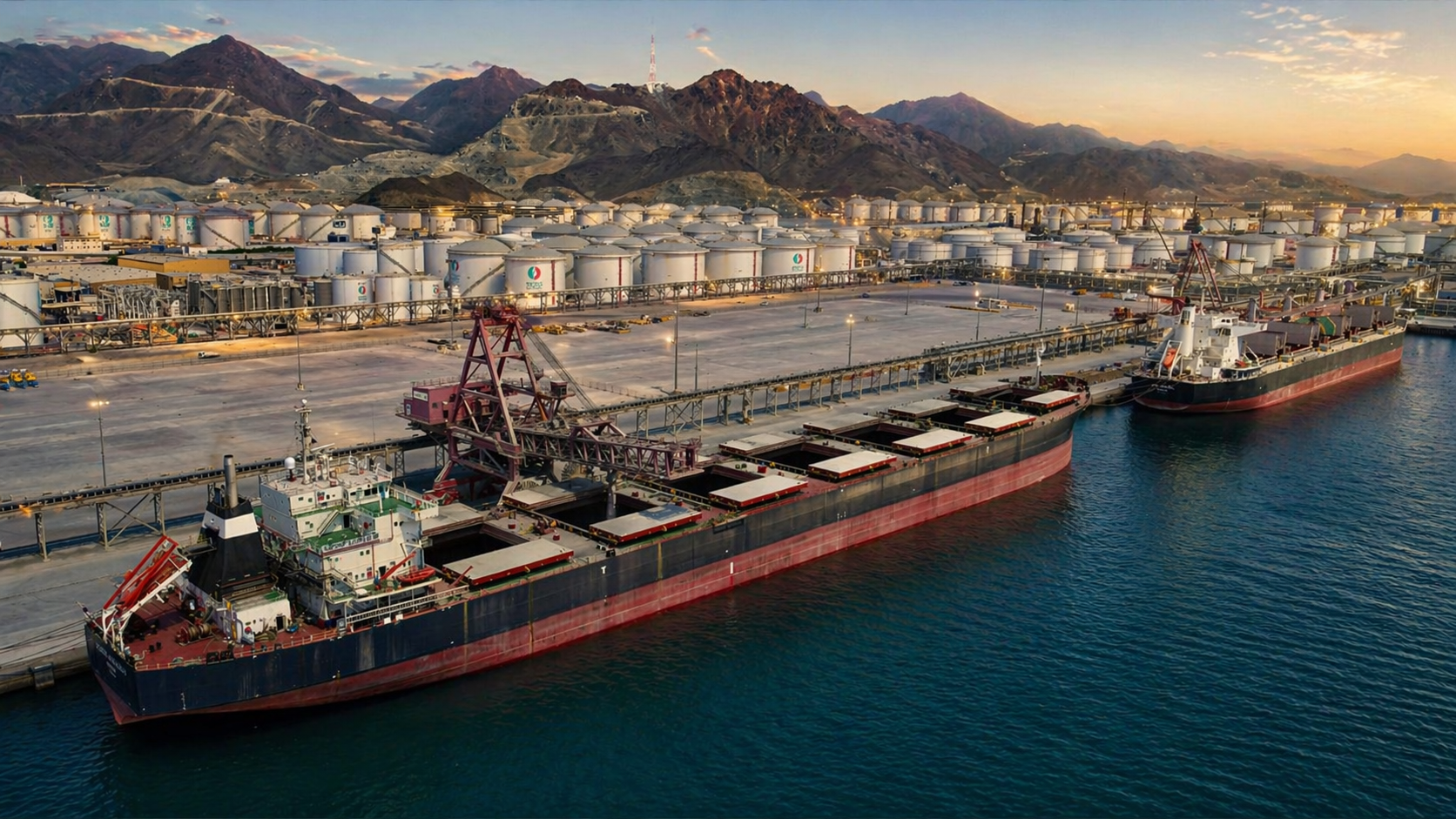
Its UAE operations include Fertil, located within the Al Ruwais industrial complex in Abu Dhabi. The facility benefits from dedicated export infrastructure and access to international markets across Asia, Australia and East and Southern Africa. This makes the UAE an important participant in global agricultural supply chains, even though the country is not itself a major agricultural producer.
During the second quarter of 2026, regional shipping disruption significantly constrained Fertiglobe's ability to export production from the UAE. By the third quarter, however, the company had restored its UAE export rate to 95% of production through active inventory management, logistics planning and commercial coordination.
It is important to distinguish this company-specific export performance from the performance of the entire UAE fertiliser industry. Nevertheless, Fertiglobe's scale makes the development commercially significant.
The real achievement was not simply restoring production. It was reconnecting available product with international customers.
The Financial Figures Reveal Another Side of the Story
Fertiglobe's latest financial results highlight the difference between operational recovery and commercial profitability.
For the first nine months of 2026, the company reported approximately $2.9 billion in revenue, representing a 44% year-on-year increase. Adjusted EBITDA reached approximately $944 million, up 31%, while adjusted net profit attributable to shareholders increased 56% to approximately $341 million.
However, the third-quarter picture was more complicated. Quarterly revenue increased 19% year on year to approximately $905 million, while adjusted EBITDA declined 19% to $231 million. Adjusted net profit attributable to shareholders fell 62% to approximately $51 million.
The reasons included increased logistics costs, lower urea prices and planned maintenance at the company's Egyptian operations.
For commodity market participants, this illustrates something fundamental. Revenue growth does not necessarily translate into stronger trading margins. A producer can sell more product while experiencing higher transportation costs, less favourable pricing or additional operational expenses.
Equally, an international buyer can secure an attractive quotation without achieving a competitive delivered cost. The market increasingly requires a more complete understanding of transaction economics.
Urea: A Commodity Connecting Global Trade with Food Security
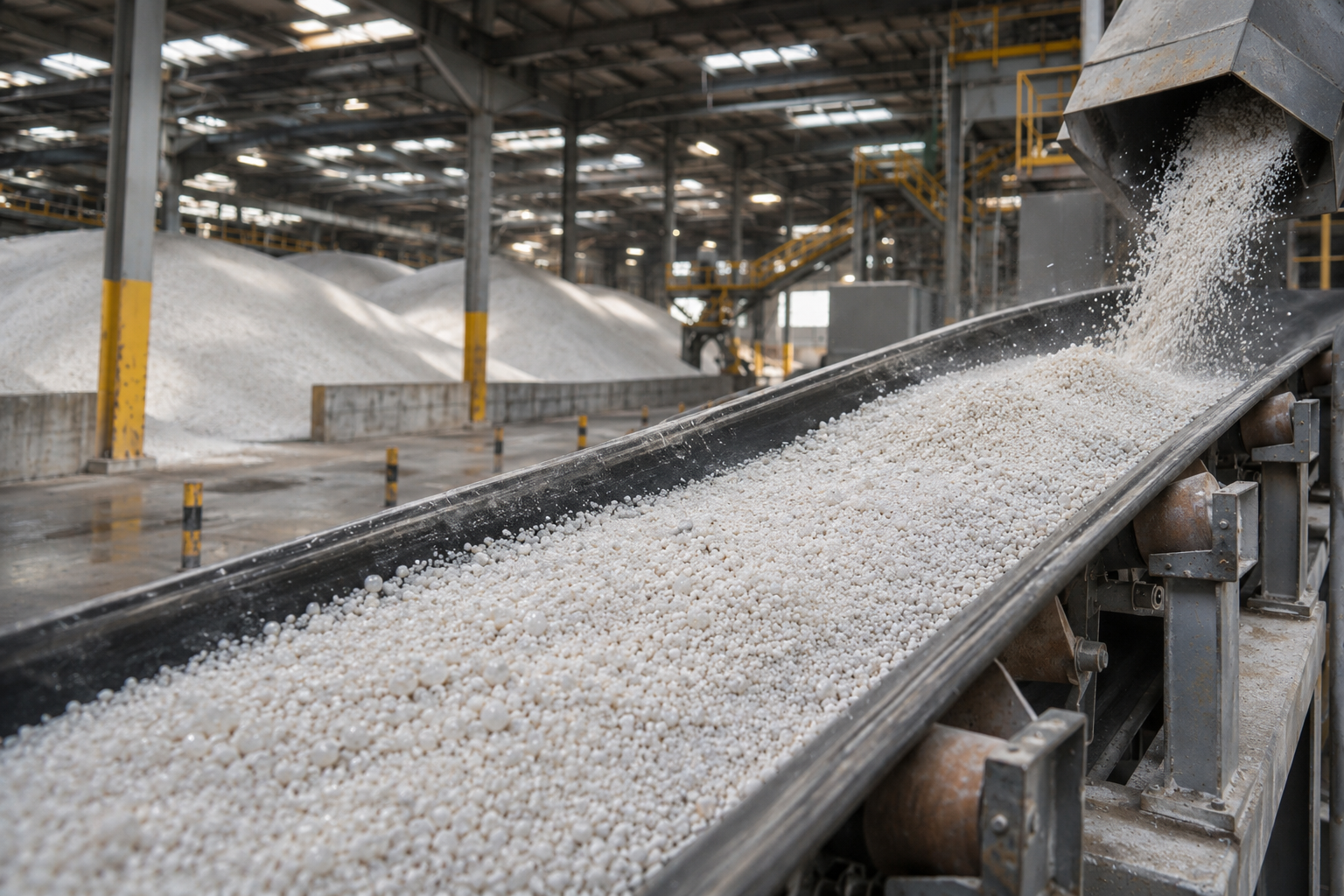
Urea is one of the world's most important nitrogen fertilisers. Commonly traded in agricultural-grade formulations containing approximately 46% nitrogen, it supports crop productivity across major agricultural economies.
Its international market connects industrial producers, shipping companies, commodity traders, agricultural distributors and institutional procurement organisations. Unlike some industrial commodities, fertiliser demand is closely connected to agricultural planting cycles.
A delay of several weeks can have consequences beyond the financial cost of delayed delivery. If product misses a critical application window, farmers may be forced to adjust fertiliser use, sourcing decisions or crop-management strategies.
This creates a level of commercial urgency that is not always reflected in benchmark prices. A shipment that arrives late may be less valuable than one available at a higher price but delivered within the required agricultural period.
For buyers operating in import-dependent markets, dependable logistics and shipment scheduling can therefore be as important as the initial purchase price.
International Fertiliser Markets Are Sending Mixed Signals
he week ending 20 November 2026 brought further evidence that fertiliser markets are not moving uniformly.
According to the Australian Fertilizer Corporation's latest weekly assessment, international urea prices remained under pressure as buyers delayed purchasing decisions and competition between exporters intensified.
Chinese prilled urea was indicated at approximately $335–345 per metric tonne FOB, while Brazilian granular urea indications were around $440–450 per metric tonne CFR. These are different products, origins and delivery bases, rather than directly comparable quotations.
Meanwhile, ammonia prices continued to find support from elevated European production costs and supply constraints. This creates an interesting divergence. In some markets, urea sellers are facing buyer resistance and weaker immediate demand. In others, higher manufacturing costs are supporting the pricing of nitrogen-related commodities.
Earlier in November, Fertiglobe reported that its Egyptian FOB urea benchmark had recovered approximately 30% from summer lows. The subsequent softening reported in certain regional markets shows how quickly short-term purchasing conditions can change.
For international buyers, understanding these differences is essential.
There is no single global fertiliser price that determines the economic viability of every transaction. Origin, product grade, shipment size, destination, freight and delivery terms all influence the final commercial outcome.
Why Cheaper Supply Does Not Always Mean a Better Transaction
Consider two hypothetical offers for a large agricultural urea requirement. One supplier presents a lower FOB quotation from a distant origin, while another offers a higher-priced product with more favourable shipping availability and a shorter delivery route.
The first offer may initially appear more competitive. However, the comparison changes once the buyer includes ocean freight, insurance, port charges, inspection costs, financing requirements and delivery timing.
Under FOB terms, the buyer generally arranges and pays for the main carriage once the goods have been loaded on board at the agreed shipment port. Under CIF terms, the seller arranges and pays the cost, insurance and freight required to bring the goods to the named destination port, although risk transfers earlier under the agreed Incoterms rule.
These distinctions matter when comparing offers. A quotation is not commercially meaningful unless both parties understand exactly what it includes.
The credibility of the supplier also remains critical. If production capacity, export authority or product availability cannot be verified, an attractive price offers limited protection against execution risk.
For serious international commodity transactions, a competitive price must be supported by credible supply, appropriate documentation and realistic shipment arrangements.
Fertiliser Affordability Is Becoming a Global Concern
A further development emerged on 19 November, when the United Nations Food and Agriculture Organization published its latest Food Outlook.
The report warned that global production of nitrogen fertilisers, including ammonia and urea, was expected to decline in 2026 as production and international trade continued to face disruption.
The FAO also highlighted deteriorating fertiliser affordability relative to agricultural commodity prices. Its assessment examined agricultural economics across several major production regions, including maize in Brazil, wheat in the European Union, rice in Southeast Asia and soybeans in the United States.
Across all four, the relationship between fertiliser costs and crop prices had deteriorated significantly during 2026.
This has implications for international demand. Farmers do not purchase fertilisers simply because products are available. Purchasing decisions depend on whether the expected benefit to crop production justifies the cost.
When fertiliser prices remain elevated relative to crop prices, some agricultural producers may reduce application rates, delay purchasing or seek alternative nutrient-management strategies. That can influence future agricultural productivity and international food supply.
Fertiliser is more than an industrial commodity. It is an essential input into the global food system.
The UAE's Strategic Position in Agricultural Commodity Trade
The UAE has established itself as an international trading and logistics centre through investment in industrial infrastructure, commercial connectivity and global shipping relationships.
Its fertiliser industry provides a clear example of how these capabilities support markets far beyond the country's domestic economy. The Fertil complex at Al Ruwais operates within an established industrial environment and benefits from dedicated urea export-loading facilities.
Its geographic position offers access to markets across the Indian Ocean, Asia and East Africa. However, geography alone does not guarantee uninterrupted international trade.
Recent regional disruption has demonstrated the importance of shipping access, operational flexibility, inventory management and commercial contingency planning. For exporters, resilience increasingly depends on how quickly logistics arrangements can be adapted when established routes become less reliable.
For importers, supplier selection must take account of these vulnerabilities. The UAE's export recovery is therefore important not simply because of the volume of product reaching international markets, but because it demonstrates the commercial importance of maintaining supply-chain continuity.
Looking towards 2027, this could become an increasingly valuable competitive advantage for established exporters and logistics providers operating in the region.
Abu Dhabi Continues to Invest in the Ammonia Industry
Alongside the recovery in fertiliser exports, Abu Dhabi is advancing industrial investments linked to ammonia production.
In November 2026, Fertiglobe confirmed that the TA'ZIZ Ammonia project had secured a $462 million debt financing facility. The project forms part of the wider TA'ZIZ industrial development at Ruwais, with development partners including TA'ZIZ, Fertiglobe, Mitsui & Co. and GS Energy Corporation.
The proposed facility has an annual production capacity of approximately one million tonnes of ammonia.
Ammonia is a crucial input in nitrogen fertiliser manufacturing, but it also serves established industrial and chemical markets. Longer-term interest in lower-carbon ammonia creates additional potential applications, although the commercial viability of these markets remains dependent on production costs, technology, regulations and demand.
The investment reinforces Abu Dhabi's broader ambition to expand industrial capabilities and participate in higher-value global supply chains.
It should not, however, be interpreted as immediate additional urea export availability. Ammonia production, fertiliser manufacturing and export allocation involve different commercial arrangements.
For international traders, understanding these distinctions is essential before assessing future supply opportunities.
What International Buyers Should Be Watching
The latest UAE export developments present a useful framework for analysing fertiliser procurement.
For importers and institutional buyers, the first requirement is to establish whether the proposed supply genuinely exists. This means understanding the producer or authorised seller, confirming commercial authority and examining whether the proposed quantity is consistent with actual production or allocated inventory.
The next consideration is product specification. Granular urea, prilled urea and other nitrogen products may serve different applications and market requirements. Nutrient composition, moisture content, biuret limits, particle size, packing arrangements and applicable regulatory standards should be aligned with the buyer's destination market.
Documentation is equally important. Depending on the transaction, this may include certificates of analysis, origin documentation, independent inspection arrangements, shipping documents and relevant safety information.
For larger cargoes, buyers must also assess port capabilities, vessel availability, loading windows and discharge arrangements.
Commercial terms should be reviewed together with these operational details. A purchase agreement that does not accurately reflect the practical requirements of delivery can create unnecessary financial and legal exposure.
The strongest procurement decisions combine price competitiveness with verifiable operational capability.
What the Changing Market Means for Sellers
For producers, authorised mandates and established commodity suppliers, the international environment is becoming increasingly selective.
Buyers have access to more market intelligence and can compare quotations across several producing regions. At the same time, geopolitical uncertainty and changing shipping costs are encouraging greater scrutiny of unfamiliar counterparties.
This creates a stronger commercial environment for sellers who can demonstrate genuine access to product, recognised documentation and realistic delivery capability.
It also makes transparent communication increasingly important. Product availability should not be confused with indicative production capacity. An expression of commercial interest should not be represented as a confirmed purchase order, and an intermediary claiming to represent a producer should be able to demonstrate legitimate authority.
These distinctions are particularly important in high-volume international fertiliser transactions where procurement commitments may involve substantial capital.
Auctora's Perspective: Credibility Is Becoming a Commercial Advantage
At Auctora Trade Group, we monitor developments across international fertiliser and agricultural commodity markets from the perspective of commercial brokerage, counterparty verification and structured cross-border transactions.
The recent UAE export recovery reinforces a principle that applies across multiple commodity sectors: access to a product is not the same as the ability to complete a transaction.
A commercially credible opportunity requires alignment between the buyer's requirements, the seller's authority, product specifications, financial arrangements and the practical realities of international delivery.
Our approach to fertiliser markets is centred on these fundamentals. Through structured engagement with qualified buyers, authorised sellers and relevant market participants, we support the assessment of international trade opportunities involving urea, ammonia, phosphates and other agricultural inputs.
Where necessary, this includes examining counterparty credibility, commercial documentation, transaction requirements and execution risk. This work is particularly relevant to companies entering unfamiliar jurisdictions or establishing new cross-border supply relationships.
The objective is not simply to identify available commodities. It is to distinguish credible, commercially structured opportunities from speculative transactions that may never progress beyond the initial offer.
That distinction becomes increasingly valuable during periods of market disruption.
Looking Towards 2027: Opportunity and Uncertainty
Several factors are likely to influence international urea trading conditions over the coming year.
Global agricultural demand will remain closely tied to planting seasons, farm economics and the affordability of fertiliser relative to crop prices. Manufacturing costs will continue to influence the competitiveness of different producing regions, while export policies and international tender activity could alter the balance between available supply and immediate demand.
Logistics will remain central to the economics of trade.
The UAE's ability to maintain and improve its fertiliser export performance will therefore be important to monitor. Meanwhile, further industrial investment in Abu Dhabi may strengthen the country's broader position in international ammonia and chemical supply chains.
However, no single development guarantees stronger commodity prices or unrestricted trade growth. The outlook will depend on the interaction between production, demand, regional competition, financing and logistics.
For international buyers and sellers, this reinforces the need for informed commercial decisions supported by current market intelligence.
The Wider Lesson: Global Trade Depends on Execution
Fertiglobe's recent export recovery provides a useful illustration of how the international commodity industry is changing.
Production, price and demand all matter. But the ability to move physical goods reliably between jurisdictions is becoming an increasingly important measure of commercial strength.
For agricultural commodities, the consequences extend beyond individual companies. Reliable fertiliser supply supports farming activity, food production and economic resilience across importing markets.
The UAE's position within these international supply chains presents a meaningful commercial opportunity. Yet the businesses best placed to benefit will not necessarily be those circulating the largest number of offers or presenting the most aggressive prices.
They will be those able to demonstrate credible supply relationships, operational capability and disciplined transaction execution.
The next phase of fertiliser trade will not be defined solely by who can produce the commodity at the lowest cost. It will also be shaped by who can deliver it reliably, transparently and on commercially sustainable terms.
That is the distinction serious international commodity markets increasingly demand.
Sources and Research
This article is independent market analysis prepared by Auctora Trade Group using publicly available information as of 23 November 2026.
- Fertiglobe — Q3 2026 Results and Management Discussion, 12 November 2026.
- Emirates News Agency — Fertiglobe Nine-Month Revenues Rise 44%, 12 November 2026.
- FAO — Food Outlook: Global Commodity Supplies and Risks, 19 November 2026.
- Australian Fertilizer Corporation — Global Fertiliser Markets Update, 20 November 2026.
- Fertiglobe — Production Facilities.
Disclaimer: Market information and price indications are provided for general commercial analysis. They do not constitute firm offers, confirmed product allocations, investment advice or guarantees of future market performance.